
Cleanout field guide
Keep your commercial office clear between cleanouts
Spare chairs, dead monitors and old files keep landing in the supply room. Here's who should decide each one, and how to keep the closet from filling right back up.
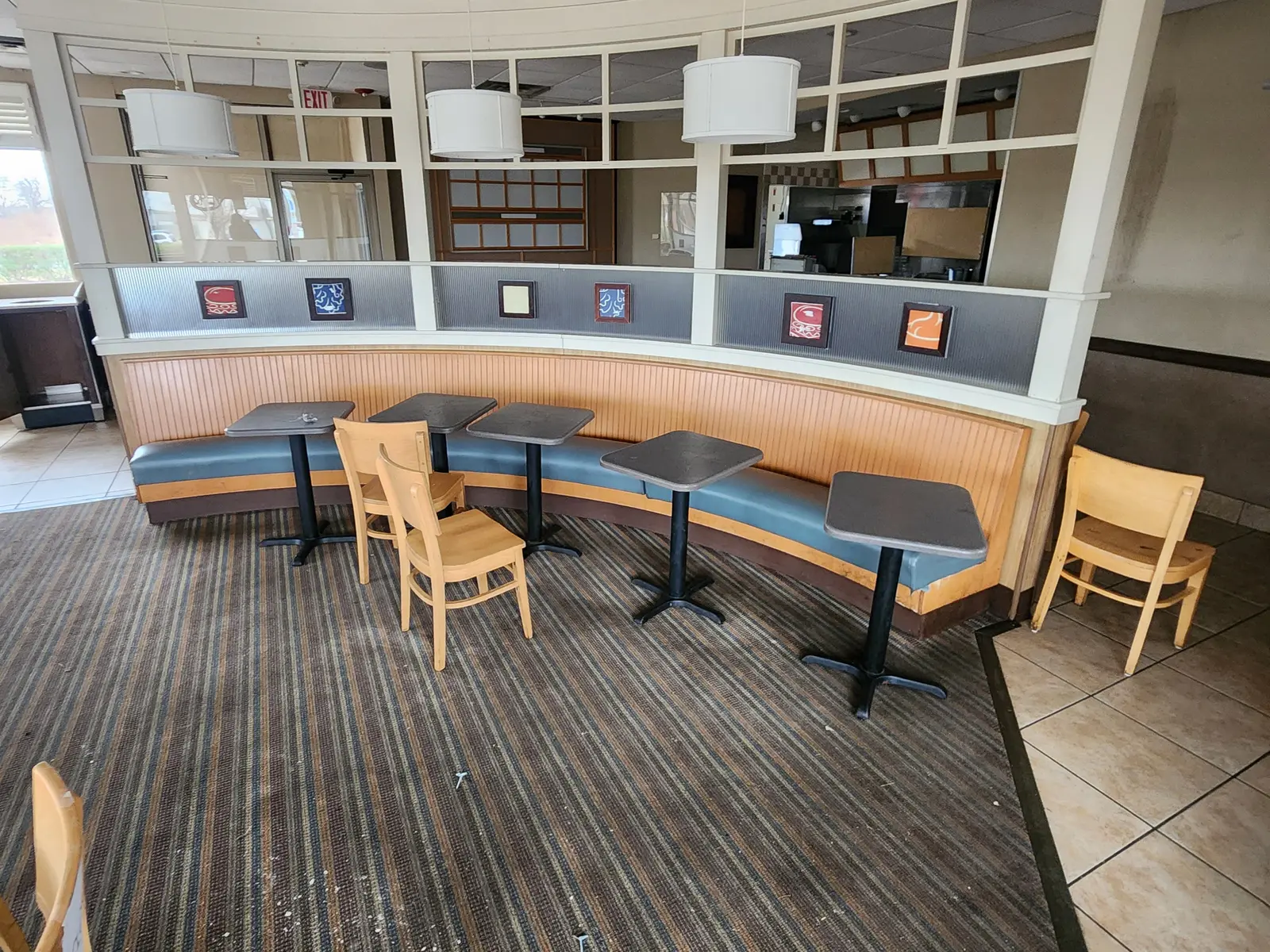
There's a monitor in your supply room with a sticky note that says KEEP FOR NOW. Nobody remembers who wrote it, and nobody knows when now ends. Multiply that note by every spare chair, dead printer and box of old files. Somewhere in that pile could be a hard drive full of files nobody meant to throw out.
To keep a commercial office clear between cleanouts, give every spare chair, monitor and file box an owner, a status and a review date, and hold anything waiting on IT or records apart. One Call Clean Out, based in Barto, hauls only what you've cleared, for offices across Berks, Montgomery, Lehigh and Bucks counties.
A better note names a person and a next step: Monitor A, supply room, waiting on IT to test it, don't hand it out yet. Anyone who opens that door knows who's up.
In this guide
Who decides what leaves the office storage closet
Most closets fill up because the person who carries a chair in isn't the person who can call it done. Your office manager can book a truck. Only IT can say a laptop is wiped, and only whoever keeps the records can say a file box is free to go. Put both names on the sheet if your office splits those jobs.
Daily tidying, the janitor's contract and IT's sign-offs are three separate jobs. Our crew's part starts after all three: we carry out what's been cleared, and everything still on hold waits its turn on the shelf. Surplus spread across several rooms makes a business cleanout. A few desks and chairs fit an office junk pickup.
The line matters most in shared rooms. A janitor looking at a conference table buried in folders shouldn't have to guess which pile is old enough to toss. Give those files an owner and a locked drawer.
Use the job titles your team already has. In a small office one person may wear all three hats, and that's fine, as long as everyone knows which hat decides. Name a backup, too. One week at the beach shouldn't freeze every decision in the building.
Clutter gets in the janitor's way more than most offices notice. The CDC recommends regular cleaning of high-touch surfaces in offices and public buildings, and nobody can wipe down a breakroom counter with two spare monitors parked on it. Shared keyboards, phones and headsets get cleaned the way their maker says, with any disinfectant used by its label. Write down who empties the bins, wipes the breakroom and restocks supplies between big pickups. Once a broken chair starts blocking the mop, it goes on the surplus sheet instead of into the spare corner.
Five kinds of surplus, from spare chairs to a left-behind sweater.
| Category | Example decision owner | What that person resolves |
|---|---|---|
| Spare furniture | Office manager or facilities contact | Future use, condition check and where it goes |
| Computers, monitors and devices | IT owner or designated technology contact | Asset status, reuse, repair and any required data review |
| Paper records | Records owner, with your business adviser | File-keeping rules, control and authorized disposal |
| Supplies and spare stock | Purchasing or department contact | Quantity needed, where it belongs and when to reorder |
| Employee belongings | Employee, coordinated through the office manager | What is personal and how to handle pickup |
Put real names on your office's own copy of this table. Then nothing in the closet waits on a whole department. It waits on a person, and that person has a date.
Text Justin photosWhat to write on every item in office storage
The tag is the small part. What keeps a monitor from sitting there another year is the sheet behind it, where somebody's name and a date live.
1. Pending review
The monitor waits on one person's decision, with a date beside it.
2. Cleared next step
It goes to a desk, a repair or the truck, and the sheet says which.
Each waiting item needs three things on a sheet its owners can edit: an ID, a spot and a review date. Only the ID belongs on the physical tag, because a shared closet is no place for staff names or details from a private file.
The reason it landed there matters, too. A monitor waiting on a power cord and a monitor that's been retired need different next steps, and on the shelf they look identical. It helps to note which team it came from, in case they want it back.
Cords and remotes can ride along, taped to the gear they belong to if the owner agrees. Few things slow a review down like a screen on one shelf and a mystery power brick in a box across the room.
| Status | Action to put beside it |
|---|---|
| In use | Check who's using it before anyone moves it |
| Available for reassignment | Whoever has the say hands it to a desk that needs it |
| Awaiting repair decision | One person looks at it, by a date you both know |
| Held for records or IT review | It stays put until the right person signs off |
| Approved for donation, recycling or removal | Write down where it's going and who meets the truck |
Back to the monitor with the KEEP FOR NOW note. Until IT says it works, it isn't a spare. It's pending, with one next step beside it. If it gets fixed, somebody walks it to a desk. If it's finished, the sign-off goes on the sheet and the monitor moves to the removal list.
Office records, computers and copiers wait for sign-off
A box with TOSS written on the side tells you what somebody wanted, not what's inside. The FTC tells businesses to keep a written policy for their files [1]: what to keep, how to secure it, how long to hold it and how to destroy it. Your records owner follows that policy. Nobody should be deciding it in a hallway with a hand truck.
Copiers belong on IT's list, too. The FTC notes that digital copier hard drives store scans, prints, copies, faxes and emails, and it urges securing them through retirement [2]. A copier looks like furniture. Inside, it can look a lot more like a filing cabinet.
What goes on a hold record
The asset or box ID, where it sits, who approves it, the open question and the next check-in date. Sensitive notes stay in your controlled file, never on a hallway tag. The item stays put until its owner signs off and says where it's going.
When check-in day comes, ask the owner or the backup for a yes or a new next step, then set a new date. Silence isn't a yes. A legal hold, a tax rule or a lease question can easily outlast your cleanout date, and that's the owner's call.
Your hauler isn't your shredder or your IT department. Settle who wipes the drives, who signs off the files and which receipts your company keeps before anything leaves the building.
Get my estimateHow full should an office storage room get?
A storage room with no limit is a hallway waiting to happen. Every spare gets a marked space. When a stack spills past its line, that's the signal to review it, and it's no excuse to borrow the next room. Two questions sort most of it: what's each spare for, and which waiting items are overdue?
Overflowing shelves, a lease return getting close or a pickup that fell through are all reasons to check early, without waiting for the calendar. How the stacks are built matters as much as how much floor they cover. OSHA's storage rules call for stable stacks and clear walkways, so a leaning pile is a call to facilities, never a reason to stack higher.
Keep the shelf and the review sheet together
Set storage space
Spares that stay get a bay and a line they don't cross.
- Spare chairs
- Monitors
- Supplies
Working review record
The owner and next decision live right beside the pile.
Owner: __________
Next decision: __________
Review date: __________
Stored boxes never go in an exit hall. OSHA requires exit routes to stay clear and bans piling gear in them, even for a little while [3]. A pickup on Thursday doesn't make Wednesday's boxes in the corridor okay.
Four questions at the storage room door
- Does it have a home on the shelf?
- Can staff reach what they need without unpacking another pile first?
- Is anything sitting outside its space because its decision is overdue?
- Who's reviewing the surplus, and who books the next step?
If the answer to that last question is nobody, that's the first thing to fix.
The monthly review that keeps the closet empty
Skip a month and the pile doesn't wait for you. The chairs that were spares in the spring are still on the sheet in the fall, under a fresh date, with nobody's name beside them. A monthly review stops that drift: every overdue item leaves the meeting cleared, or with a written reason to stay on hold.
It can pay, too. Nothing on hold can be resold, because nothing on hold can leave the building. Once your spares are cleared, the usable ones may sell, and resale can bring a bill down, depending on the items. On one summer job, a $4,800 quote became an $1,800 bill because One Call Clean Out was able to resell a large majority of what was there.
Usable pieces may go to resale through Perkiomenville Auction or Facebook Marketplace, to charities like Goodwill and Liberty Thrift, or to Mayer Pollock Steel Corp as scrap metal.
One example rhythm: a quick look at the storage room on a weekly office walk, and a monthly sit-down for everything pending. Busier offices may need it more often.
- Bring what's due. The item record, plus the one question its owner has to answer.
- Write the decision. Reuse, repair, hold a while longer or haul away.
- Name the handoff. A person and a date beside the pickup, drop-off or next check-in.
- Close the line. Once an item leaves, check it off and keep the receipt, so nobody goes hunting for it.
When cleared surplus adds up to a full cleanout, our office cleanout prep guide covers loading and building steps, and the office-building cleanout page covers how we haul it. Get my estimate once your team decides what leaves.
As for the monitor with the KEEP FOR NOW note, it should leave your next review with an ending: a desk that needs it, a repair with somebody's name on it, or a cleared spot on our truck. The sticky note goes in the trash either way.
Text Justin photosQuestions about keeping a commercial office clear
How should offices divide daily cleaning, janitorial service, and surplus hauling?
Give each one its own lane. Staff clear their own desks, janitors handle trash and high-touch surfaces under their cleaning contract, IT and records clear the gear and files they control, and a cleanout crew like One Call Clean Out hauls only the surplus that's been cleared to leave.
Who should own retired office computers and stored files between cleanouts?
A named person in IT or records, with a backup, decides when retired computers and archived files can leave. That's a different person from the office manager who books the truck. Private files stay locked up so janitors never have to guess, and data-bearing gear waits until IT releases it.
How do you stop an office storage closet from becoming a mystery pile?
Give everything that goes in an owner, a status and a next step, so nothing gets parked in a corner to wait. Set a limit that keeps walkways and cleaning access clear. Then review the backlog on a schedule, so broken furniture leaves before the closet fills.
When should an office arrange a cleanout versus a smaller surplus pickup?
It comes down to how much is cleared and how many rooms it's in. A few cleared desks or chairs suit an office pickup. A multi-room clear-out falls in Justin's $1,200 to $4,000 office planning range, cleared electronics run about $200 to $600 on their own, and the walkthrough sets the final price.
Sources and further reading
- Federal Trade Commission. Protecting Personal Information: A Guide for Business
- Federal Trade Commission. Digital Copier Data Security: A Guide for Businesses
- Occupational Safety and Health Administration. 1910.37, Maintenance, safeguards, and operational features for exit routes
Business details supplied by Justin Erb, November 2026.
LIMITED-TIME OFFER
Year-end special: save $25 or $75 on your cleanout.
Take $25 off any job of $200 or more, or $75 off any job of $500 or more.
Through December 31, 2026. One discount per job. Job totals count before any resale credit.
Clear the approved surplus
When the furniture and gear are cleared to go, text Justin photos of the storage room and the loading door, and he'll send back a range. The walkthrough sets the exact job and the final price before anything moves. Calls and texts are welcome from 7 a.m. to 7 p.m.
Text Justin photosGet my estimateCall (484) 714-0484