
Cleanout field guide
When resale value can lower a cleanout bill
Resale can take money off a cleanout bill. How much gets settled with Justin before anything leaves the house.
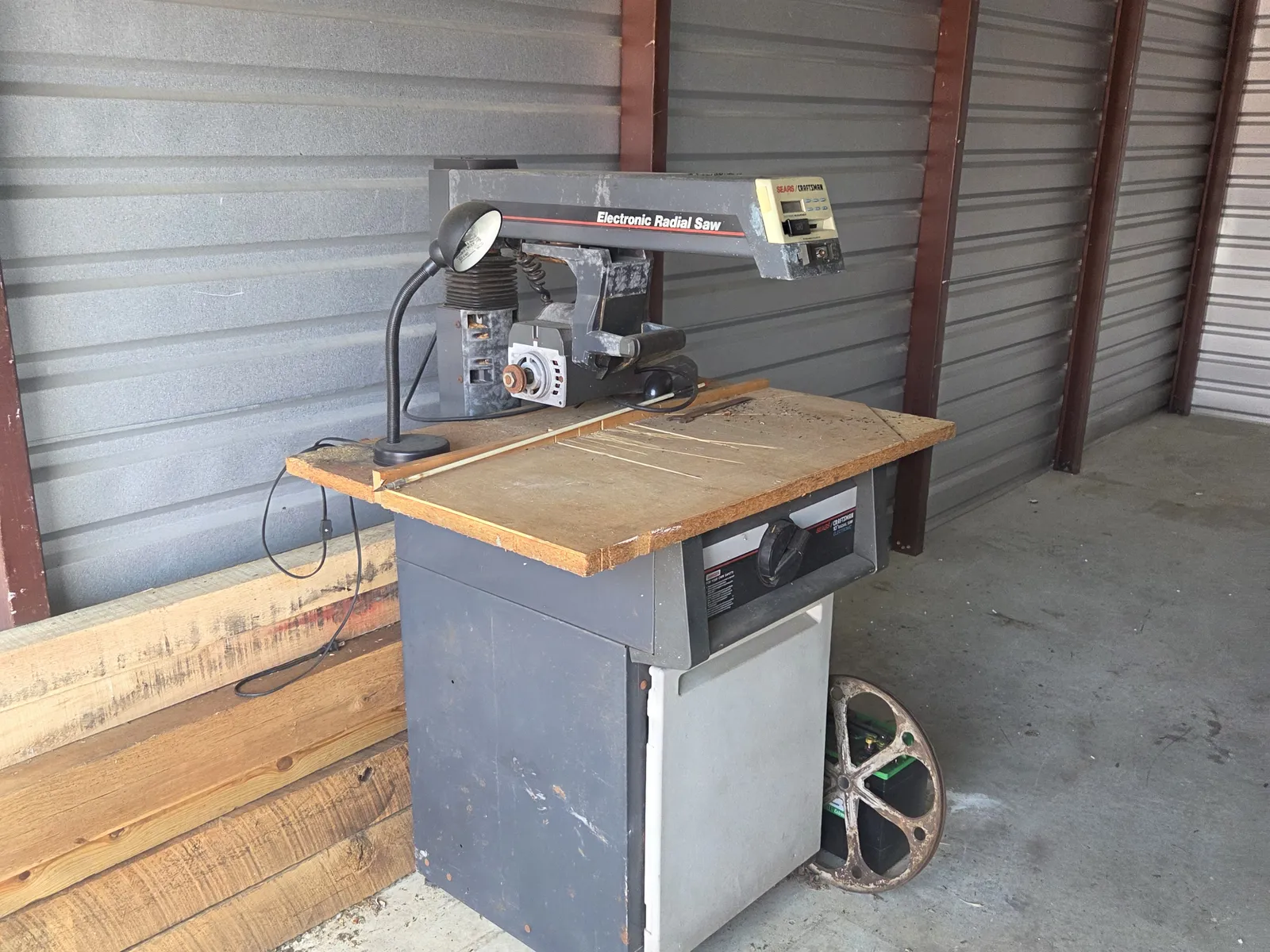
A radial arm saw that still runs feels like money sitting in the corner. Maybe it is. What you paid for it and what a lookalike lists for online are both easy to find. Neither one is what comes off a cleanout bill.
Resale value can lower a cleanout bill. One Call Clean Out looks for chances to resell, donate and recycle usable items on cleanouts across Berks, Montgomery, Lehigh and Bucks counties, working out of Barto. Eligible resale value may reduce the job cost, depending on the items and the cleanout [1].
Finding the number that does count takes a little digging. So does deciding whether to sell the saw yourself or let it ride with the cleanout, and whether it can be sold at all.
In this guide
Which kind of resale value actually counts
A used piece carries more than one price. The receipt says what somebody paid once. A listing says what a seller hopes for. A finished sale says what a buyer actually paid, and even that isn't a credit until someone agrees to it.
The IRS, writing about donated goods, says used home goods can sell for far less than their original retail price, and it points to condition and recent sale dates as the things to match [2]. That's tax guidance, not a cleanout rule, but it's a good reality check.
For the saw, start with the maker and model, then look for sold listings in the same shape. A saw that runs, with its blade guard and cord, finds a different buyer than one nobody's switched on in years. eBay's pricing guidance leans on recent similar sales, and it notes that its suggested ranges leave out fees.
Only listings that actually sold tell you much. One that ended unsold shows what somebody hoped for. A handful of finished sales beats one big asking price, and screenshots of them next to your photos give whoever's looking actual numbers to work with.
Five numbers you'll run into, and the only one that comes off a bill.
The first four are background. Only the last one changes what you'll pay.
| Figure | What to record | How to use it |
|---|---|---|
| Original purchase price | Receipt and purchase date, if available | Background information, not the amount to subtract from the job |
| Current asking price | Listing, condition and date | Evidence of what a seller wants, not a completed transaction |
| Comparable completed sale | Item match, condition, sale date and actual result | A reference to discuss, with differences made clear |
| Expected net sale proceeds | Proposed sale amount less the selling costs you expect | A guess for selling it yourself, until it sells |
| Agreed cleanout credit | Who's giving it, the exact piece and the amount | Money off the bill |
The saw's condition matters too. A missing guard or a wobbly arm puts it next to the beat-up listings, not the clean ones.
Where the buyer lives matters as much as what they'll pay. Someone local can back a truck up and carry a cabinet off your first floor. A buyer three states away means packing and shipping, and somebody pays for that before you see a dime.
When a piece can't be sold at all
Two things can stop a sale before price ever comes up. The first is who owns it. If a brother has claimed the saw, or nobody's sure whose it is, it waits until that's settled. When the saw sits in a parent's house, every piece the family hasn't settled is worth flagging before the estate cleanout walkthrough, so nobody prices something that isn't free to go.
The second is a recall. A saw's maker and model can go straight into the CPSC recall database, and a minute there beats a guess. CPSC says selling a recalled product is against the law even when it looks fine, and resale is only allowed after the official fix is made and the listing says so [3]. A clean coat of paint tells you nothing about a recall.
Before anyone offers it for sale
- Who gets to say yes to selling it or giving it away.
- The maker, model and any numbers you can read without taking it apart.
- Whether a recall notice matches it, and what that notice says to do [3].
- Any damage, missing parts and anything you don't know about how it runs.
Until those are answered, the piece stays put. A high asking price doesn't make something legal or clear to sell.
Photos that help Justin judge resale value
A wide shot of the room shows where the saw sits and how it gets out. It can't show the maker's plate, the blade or the crack in the table. Close-ups do that.
1. The whole piece
From more than one side, so nobody mixes it up.
2. Its condition, honestly
Damage and missing parts in plain view, unknowns left as unknown.
Plain facts work best. If you don't know whether it turns on, write untested. There's no need to plug in an old saw or take it apart just to sound surer, and a photo of the chips beats hiding them.
Antiques, art, jewelry and collectibles are a different animal. A room photo can't tell a treasure from a copy, and a cleanout quote is no stand-in for an appraisal. A qualified appraiser or auction house can tell you what they'd need to see before you agree to sell.
What to send with each piece
- Whole-piece photos from a couple of angles.
- The maker's label, model number or other marks.
- Measurements, what's missing and close-ups of any damage.
- What you know about how it works, and what you don't.
- Where it sits, the way out, and the date the place has to be empty.
Keep all of it together under one plain label, like saw by the garage door, so nobody has to guess which piece you meant.
Text Justin photosSell it yourself, or let it lower the bill?
Selling it yourself can net more than a credit. It also costs more than it looks: photos, messages, waiting on a buyer's pickup, fees, packing and shipping all come out of what you clear. And money you're hoping for isn't money in hand yet.
Here's how fast it shrinks: a $200 sale, minus $30 in fees and $25 for packing and shipping, leaves $145 before your time counts. Those are example numbers, not an eBay quote or a One Call Clean Out offer. eBay's fee rules change by category and listing type, so one flat percent won't fit every item.
If you'd rather fold the saw into the cleanout, ask Justin whether it qualifies and what the whole job covers. Mentioning a piece doesn't mean anyone's agreed to appraise it, consign it or buy it for cash. For what the hauling itself runs, our general cost guide has the planning ranges.
An auction house is a third option with its own rules. Commission, trucking, payout timing and what happens to a piece that doesn't sell all vary from one house to the next. Conestoga Auction Gallery's published info lists commission and trucking as separate costs and wants drop-offs approved first. Nobody should assume a whole house goes in as one lot.
Four ways the saw can leave, and what each one still needs from somebody.
| Route | What needs settling | Work to assign before choosing |
|---|---|---|
| Sell it yourself | Real offer, selling fees, buyer and pickup date | Listing, messages, payment and pickup timing |
| Discuss a cleanout credit | A yes on the piece, the amount, and where it shows on the estimate | Photos for Justin and a day for the piece to leave |
| Donate it | A charity's yes, and a pickup or drop-off plan | Getting it there, and a plan if they say no |
| Include it in removal | It's on the job list Justin priced | A yes that it can go, and a heads-up on anything awkward |
If you're selling it yourself, the saw stays off the haul-away list while it's listed, and it helps to have a cutoff date ahead of closing and a plan for where it goes if it hasn't sold. With a credit, the questions are when the piece changes hands and whether a later sale price changes yours, and the answers belong next to the quote.
If the bigger question is what should leave at all, the household sorting guide starts there.
Put the resale deal in writing
A credit that only lives in a phone call is easy to lose. By pickup day it's hard to say whether the saw was supposed to take something off, how much, or whether the price already counts it. A few lines per piece, kept with the estimate, settle that.
Open the six-line resale record
| Line | What to write |
|---|---|
| The piece | Which one, with a photo |
| The amount | What comes off, and where it shows on the estimate |
| The day it goes | When it leaves, and who looks after it until then |
| A later sale | Whether what it sells for later changes your price |
| If it's not as described | Who looks it over, and how a new number gets agreed before it leaves |
| If it's turned down | Where it goes instead, and by when |
A private sale on the side stays its own plan unless whoever's giving the credit takes it on. If an answer's still pending, ask One Call Clean Out to review the item before counting it as money off.
On a family house, any amount you settle on belongs in the estate cleanout budget, and seasonal offers sit on our ways to save page. Then the saw gets its ending: a credit written into the price, a sale of your own with a date on it, a charity that said yes, or a ride out with everything else.
Get my estimateQuestions about resale value during a cleanout
When can resalable items actually reduce a cleanout bill?
When the pieces are in good shape and there's buyer demand for them. Eligible resale value may lower the job cost, and Justin sizes that up when he sees the pieces in person. It's never guaranteed.
Why does an original receipt or online asking price differ from a cleanout credit?
Because neither one is a sale. A receipt shows what something cost new, and an unsold listing shows only what someone hoped to get. Even a real sale leaves out fees, packing and shipping, and a cleanout credit also has to cover hauling, storing and selling.
What photos and details help Justin review a piece for possible resale?
Clear shots of the whole piece, the maker's label or model number, any cords or parts that go with it, and honest close-ups of chips, stains or missing hardware. If you've found sold listings that match, send those too, along with the rest of your haul-away list.
Where does One Call Clean Out route usable items after a cleanout?
Usable pieces can go to local auctions or online resale when their condition and local demand fit. Things that don't resell may go to charities like Goodwill, Salvation Army or Liberty Thrift, depending on what each one accepts, and materials that can be recycled may go to a recycler.
Sources and further reading
- One Call Clean Out. Cleanout service information and resale discussion
- Internal Revenue Service. Publication 561, Determining the Value of Donated Property, December 2025
- US Consumer Product Safety Commission. For Buying and Selling Products Online
Business details supplied by Justin Erb, November 2026.
LIMITED-TIME OFFER
Year-end special: save $25 or $75 on your cleanout.
Take $25 off any job of $200 or more, or $75 off any job of $500 or more.
Through December 31, 2026. One discount per job. Job totals count before any resale credit.
Ask about resale before pickup day
Text Justin photos of the pieces you think might sell, along with everything else that's going. He'll give you a range, and the walkthrough settles the final price, credit and all, before anything is removed. Whatever the saw turns out to be worth, you'll know before it leaves the corner.
Text Justin photosGet my estimateCall (484) 714-0484