
Cleanout field guide
Dumpster rental vs a full-service cleanout crew
A dumpster gets you a big steel box in the driveway. A crew gets you the people who fill it. Which one you need comes down to the stairs.
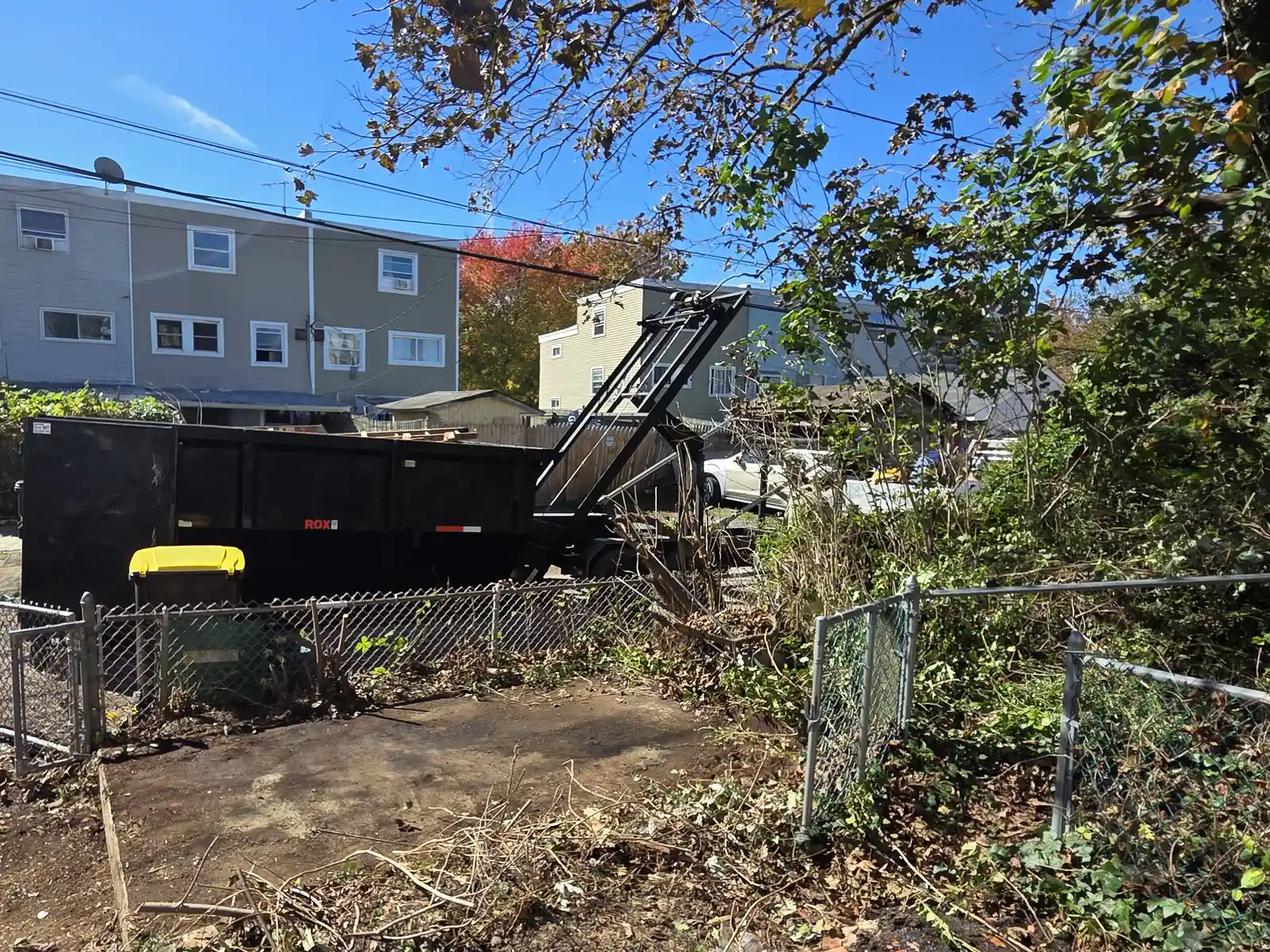
An 18-yard dumpster will hold the dresser from your upstairs bedroom without any trouble. It just won't climb the stairs to get it. That's the real difference between renting a dumpster and hiring a cleanout crew, and it's easy to miss when you're comparing two prices on a phone screen.
Rent a dumpster when you have a clear spot for it, a few days to fill it and helpers who can lift. Hire a crew when you want the carrying and loading done for you. One Call Clean Out offers both from Barto, with 18-yard dumpsters and cleanout crews across Berks, Montgomery, Lehigh and Bucks counties.
Whichever way you lean, price both against the same list, the same stairs and the same off-limits items. Ask each one what happens if the truck can't get in or the pile grows past the job you agreed on. Then you're comparing two finished jobs, not a box against a crew.
In this guide
Does a dumpster fit your property?
Start with the ground, before any price. For a dumpster rental, the company needs to see the spot you have in mind and tell you whether its truck can get in, set the box down and get back out with it full. Tight gates, parked cars and low wires all count here.
Then picture pickup day. The driveway that's empty when the box arrives can have a contractor's van in it by the time the truck comes back. Ask how you call for pickup, how much room the driver needs and whose job it is to keep the lane clear.
Here's what a dumpster price leaves out. The box sits outside, and every basement carton and that upstairs dresser are still inside. Nobody's carrying them out unless you are. If the stairs or the heavy pieces are more than your helpers can handle, settle that before you pay for delivery, or compare full-service junk removal instead.
Permission comes next. Pottstown Borough lists a Dumpster and POD Permit for temporary street parking placement [1]. That's one borough, though, so check with your own town, HOA or landlord before a box lands on the street.
Five questions before a dumpster arrives
- Placement: Has the company okayed the drop spot and the driveway?
- Permission: Who gets the town's approval, and the owner's or HOA's if you need it?
- Loading: Who's lifting, and do they have the help and gear the job takes?
- Dates: Does pickup match your pile?
- Backup plan: What happens, and what does it cost, if a car blocks drop-off or pickup?
A crew needs to know the building, too. Tell them about the rooms, the floors, any elevator and where a truck can park, so nobody assumes it'll pull right up to the door. And if you don't know yet who's helping or how the crew gets in, wait to book until you do.
Who carries what, from the room to the truck
Put a name next to every job on that list. The words junk removal don't tell you whether pickup starts in your bedroom or at the curb, and a dumpster in the driveway doesn't come with anyone to fill it. When our crew does the job, the carrying is ours. One customer summed up the difference in a single line: "They pulled up asked me where everything was at, and then boom done!" (April Yavon, Google review)
Who gets the dresser outside?
Upstairs room
Dresser
Carry items outside
You, a helper or the crew?
Outside
Rented container
Get specific about the handoffs. Say a friend brings boxes downstairs and someone else loads them: agree on where the boxes wait in between. When a bed frame has to come apart, ask whose job that is and whether it's in the price. A curbside quote only works if you've got a real way to get everything to the curb.
Compare the rental plan with the crew quote for each task.
| Task | Rental plan: assign it | Crew quote: check it |
|---|---|---|
| Decide what stays | One person signs off on the list | What the crew needs decided before it starts |
| Carry from each room | A helper, a friend or a hired hand | Rooms, stairs and the way out, in writing |
| Prepare bulky items | Who takes apart the bed frame or the sectional | Is taking apart included? |
| Load and transport | Who fills the box, and when it gets picked up | The full list, hauled |
| Handle excluded items | Where off-limits things go, and who takes them | Anything not covered, in writing |
| Finish the space | Who deals with whatever's left behind | How the rooms should look when they're done |
Settle what's leaving before you hand out the lifting. The keep, donate, sell or remove guide helps with the list. Once it's done, you'll see which work you're keeping and which you're paying someone else to do.
Get my estimateHow to compare a dumpster quote with a crew quote
Give both companies the same list and the same building. Then go line by line and mark each charge included, extra, not needed or unknown. A blank isn't a zero. It's a question nobody's answered yet.
Say it's a garage: an old sofa, a wall of boxes and a workbench you're keeping. The dumpster price covers the box and the pickup, and the lifting's on you. The crew price covers carrying the sofa and the boxes out too. So the real question is whether you'd rather pay for that lifting or do it yourself.
Then the basement joins the job. Both numbers change, so get both quotes updated before you pick the cheaper one. A whole-house crew quote next to a one-garage dumpster quote isn't a comparison at all. It's two different jobs.
Three lines both quotes need
01
Same list, same stairs
Both companies price the same items and the same way out.
02
The whole amount
Base price plus every extra, each one counted once.
03
What's still yours
Your jobs and your open questions, where you can see them.
Some terms only matter once the job's underway. For a rental, ask about pickup day, weight caps, extra days and swapping in a second box. For a crew, ask what happens to the price if a room gets added. Those are fair questions for anyone, not fees every company charges.
Read the rental and crew entries together for each comparison.
Open the eight-row rental and crew quote comparison
| Write into the comparison | Rental quote | Crew quote |
|---|---|---|
| 1. Match the jobSame item list and building details sent | Yes / still to send | Yes / still to send |
| 2. Check work and limitsWork included in the base amount | Write down the exact terms | Write down the exact job |
| Separate loading or preparation | Included / amount / unknown | Included / amount / unknown |
| Allowances and limits | Record time, weight and load terms that apply | Record agreed items, load and work limits |
| Change or failure terms | Ask about blocked placement, extension or excess load | Ask about added items, stairs or extra work |
| 3. Settle the total and remaining workItems outside the quote | Where they go, and what that costs | Where they go, and what that costs |
| The whole amount | Base plus separate costs not already included | Base plus separate costs not already included |
| Work still assigned to you | Tasks and your time estimate | Tasks and your time estimate |
Put your own time next to the money, too, and don't bury it inside a made-up hourly rate. When someone offers a credit, find out exactly how much and for which things before you subtract it. An open question stays open until they answer it.
The junk removal cost guide shows which photos and details help Justin give you a range.
Which one fits your job: dumpster or crew?
Plans fall apart in small ways. The truck can't fit the driveway, a helper cancels, or one thing in the pile needs a trip of its own.
Get a yes or no on the tricky stuff before anything's booked. For example, Bethlehem Landfill lists electronics, hazardous waste and concrete among items it doesn't accept [2]. That's one landfill, not a rule for every company, but it shows why a mixed load needs a plan.
Old TVs, freezers, mattresses and remodel debris are worth mentioning on the first call, since haulers and landfills each set their own rules. When something odd turns up after booking, call before it goes in with everything else.
Household chemicals stay out of the load until you've checked your local drop-off rules. EPA warns against mixing leftover household hazardous products. Bagging them together to save room can create real hazards and can rule out safe disposal.
A garage you'll sort slowly
A rental fits when you've got a solid spot, people to load and a few days to toss things in as you decide. Ask what happens if the sorting runs long or the box fills early.
Do the deciding before the rental clock starts, or a garage full of maybe boxes can eat the whole week. Anything you might donate or sell stays out of the box until it's decided.
Heavy pieces deep inside the house
A crew fits when the heavy things live deep inside: the dresser upstairs, a sectional in the family room, bed frames behind a tight turn in the hall. That carrying is exactly what you're paying for, so the quote should say so. Spell out the stairs and the indoor carry, because a curbside price still leaves getting everything outside to you.
Dense or mixed renovation material
Check your actual debris with both companies before you choose by truck size or box size. Get the accepted materials, weight caps and banned items in writing. A bigger box doesn't get around a ban.
Some jobs split neatly in two. The old furniture goes first, and the remodel makes its debris later. Price a crew for the furniture and a rental for the debris that's allowed, then line up the dates and totals for both so each one handles its own part.
Once every job has a name next to it, you're comparing two finished jobs side by side. Ask One Call Clean Out about your cleanout with your list and your building, or look over our cleanout services first. Either way, somebody's carrying that dresser down the stairs. Decide who before anyone quotes you a price.
Text Justin photosQuestions about dumpster rental versus a cleanout crew
How do I choose between renting a dumpster and hiring a cleanout crew?
It comes down to who carries everything from its room to the driveway. An 18-yard dumpster suits slow sorting when you've got helpers and a clear spot for the box. A full-service crew suits heavy basement pieces, upstairs furniture or a tight deadline, when you'd rather someone else did the carrying and loading.
What driveway and permit checks come before booking a dumpster?
Make sure the truck can get in and out with the box, and that you're allowed to put it there. Show the dumpster company your drop spot, gates, low wires and where cars park, for delivery and for pickup. Then look up your town, HOA or landlord rules. Pottstown Borough, for example, lists a Dumpster and POD Permit for temporary street parking, and the rules change from one address to the next.
Why does an 18-yard dumpster not mean you can fill it to the top with heavy debris?
Because the box has a weight limit as well as a size. A couch fills a lot of space without weighing much, while tile or brick can hit the weight limit well before the container looks full. Ask Justin about both for your exact materials before you load heavy remodel debris.
How do I compare a dumpster quote fairly against a cleanout crew estimate?
Price the same finished job from both, not a drop-off rate against a full cleanout. Put delivery, rental days, pickup, weight limits, the things they won't take and your own loading time beside a crew estimate for the same list. The crew price includes the carrying. Then decide whether doing that part yourself is worth the difference.
Sources and further reading
Business details supplied by Justin Erb, November 2026.
LIMITED-TIME OFFER
Year-end special: save $25 or $75 on your cleanout.
Take $25 off any job of $200 or more, or $75 off any job of $500 or more.
Through December 31, 2026. One discount per job. Job totals count before any resale credit.
Price the crew option against your list
Tell us what's leaving and where it sits. Photos and a few notes get you a starting range. The walkthrough settles the price, and nothing gets carried out until then.
Text Justin photosGet my estimateCall (484) 714-0484