
Cleanout field guide
How attic cleanouts help with pest problems
Say you climb up for the tree stand and find a box by the hatch with one corner chewed away. Hauling the boxes out sounds like the fix. It's one piece of it, and the timing matters more than most people guess.
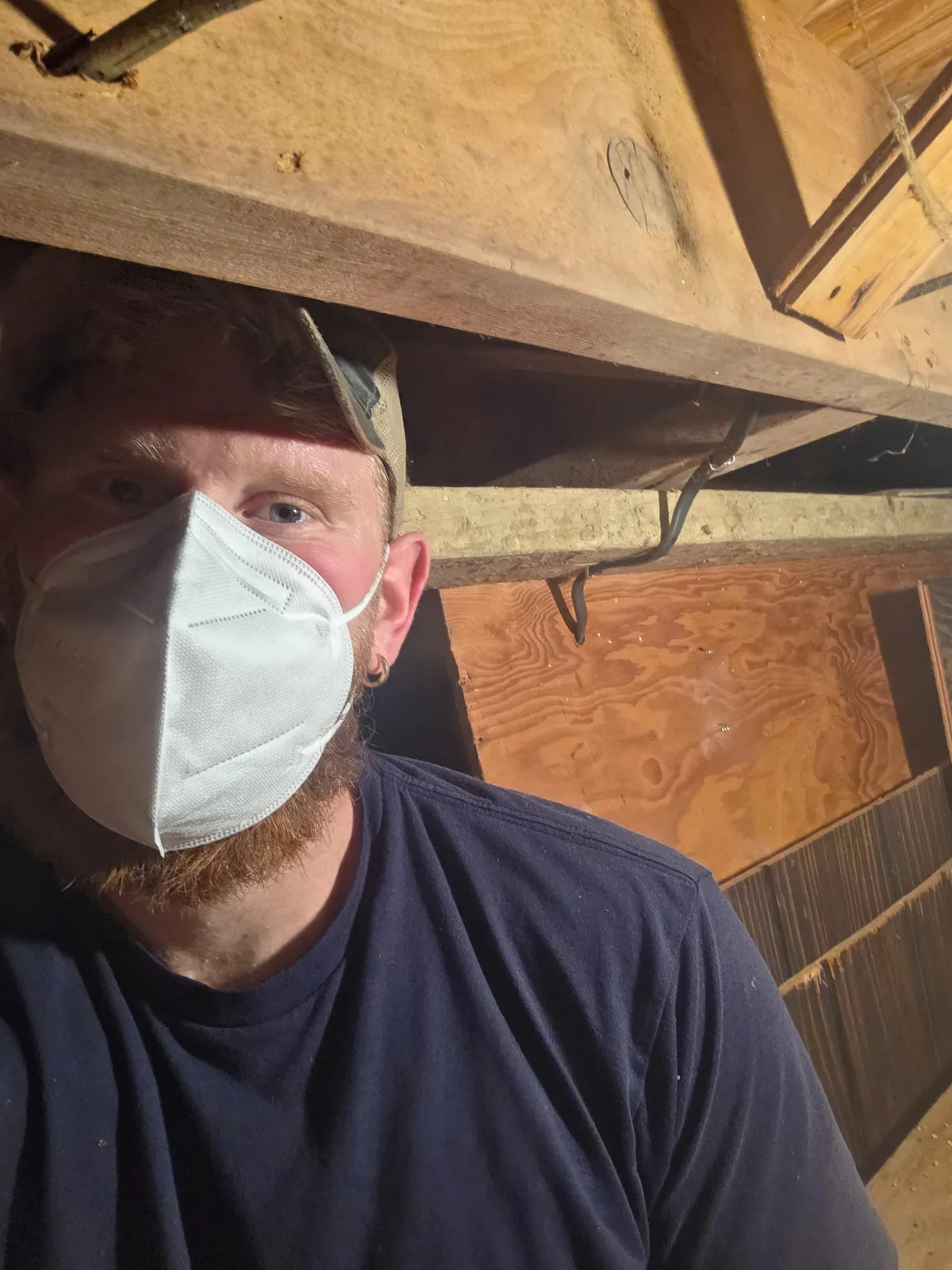
That chewed corner says something got into the attic at some point. It can't say whether anything's still there: CDC points out that old gnaw marks can remain long after rodent activity stops [1].
An attic cleanout from One Call Clean Out takes away the stacked boxes, old furniture and loose gear that give mice and squirrels places to hide, so a pest pro can see the space and you can spot new signs. Justin Erb's Barto crew does it across Berks, Montgomery, Lehigh and Bucks counties, once any needed inspection is done.
Boxes are only part of it. Keeping rodents out also means handling entry holes, food, water and shelter [1]. If you find droppings, torn insulation or a live animal, the sorting waits and a pest or wildlife pro goes first.
The surprise is how much. The Pennsylvania Game Commission warns that exclusion timing matters: sealing bats out in summer can trap young inside and push animals into living rooms looking for an exit. Hauling at the wrong moment has its own cost, since a simple cleanout can turn into surprise pest cleanup.
In this guide
What an attic cleanout can't do about pests
A cleanout is good at exactly one thing here: taking away the cardboard, old furniture and loose gear where something could nest. Finding out what's living up there, closing the gap it came through and dealing with damaged insulation all belong to someone else.
Bats get the warning, but other wildlife may have young too. So the wildlife pro decides what work can start and when holes get sealed, even the gap that looks like a ten-minute patch.
Here's who handles what:
| Work | What to ask that pro |
|---|---|
| Stored item removal | Which boxes, furniture and gear leave, how the crew gets up there, what stays and any spots that are off limits |
| Pest or wildlife assessment | What's active, where animals may be getting in, and what control or exclusion work makes sense |
| Contaminated-material or insulation work | Who inspects damaged materials, what specialist work is needed and when items can move |
Nobody has to do all of it. What matters is that each pro says out loud where their part stops and what has to finish before they start.
Hauling boxes takes care of the shelter item on CDC's rodent-prevention list [1] and nothing else on it. When you book attic cleanout help, the quote covers the spots and items cleared to leave, and trapping, sealing holes and new insulation belong on someone else's bill.
What to write down about attic pest signs
Write chewed box by the attic hatch, not mice everywhere, unless an inspector confirmed it. The first sends the next pro to the right corner. The second is a guess wearing a diagnosis.
Attic signs can point to rodents or wildlife like bats, squirrels and raccoons, covered in the Game Commission's nuisance-wildlife guidance. What happens next depends on which one it is. That's why any scratching you heard matters: when it was, and roughly where over the house it came from. A photo of chewed cardboard can't tell anyone which animal did the chewing, so it's worth keeping what you saw apart from what you suspect.
CDC lists droppings and gnaw marks as signs of rodents [1]. Note where you saw them and whether anything has changed since. Suspect waste stays where it is, even when the light is bad for a photo.
A week from now, nobody remembers which box it was.
Open the five-line attic sign log
| Record | Useful detail |
|---|---|
| Location | Near the hatch, beside a certain box, or another spot you can point to |
| Observation | Chewed packaging, droppings, an animal sighting, odor or damaged material, described without guessing the cause |
| Date and change | When you noticed it and whether the visible condition has changed |
| Photo | A clear view from a safe spot; leave uncertain areas untouched |
| Next decision | Who will inspect it and which items stay on hold |
Five short lines are plenty. They keep the problem spots apart from the boxes nobody's checked yet. If a pro has already inspected or treated the attic, their written notes about the stored items are the best thing you can pass to Justin before booking.
Text Justin photosDroppings and odd insulation stay put until a pro looks
Sweeping up before anyone comes to look feels like good manners. With rodent waste it's the one courtesy to skip, so that corner stays exactly as you found it until a pest pro has seen it.
Hands off, eyes on
The rule up there
Look all you like. Move nothing that might be soiled.
What that means, spot by spot:
Droppings and nesting
No broom and no vacuum, per CDC.
Insulation
Not pushed aside to reach a box.
And the rest of the attic:
Stored boxes
Counted from the walkway, not opened.
CDC also recommends calling a rodent pro when signs point to heating or cooling ducts [2]. If you suspect the ducts, mention it on that call. Duct cleaning isn't part of an attic cleanout.
Before anyone carries anything, one question is worth settling: who gives the go-ahead on boxes near a problem spot, and how does that word reach our crew?
If the inspector finds a bigger problem area, the list changes before any hauling does.
Writing the attic cleanout list by zone
Once the inspector has been up, the list is easiest to write by zone. Say they clear an old chair to leave, hold the stained boxes beside it, and hand the insulation to another pro. That's three lines on your list, each tied to a spot in the attic, and it's what Justin works from when he tells you what the crew will take.
If the crew finds something on the day that isn't on the list, your contact makes the call before it goes on the truck.
A complete list covers five things:
- Cleared items: furniture, boxes or loose gear the inspector says can leave, with any handling notes.
- Items staying: things left in place or going to another room or storage spot.
- Off-limits areas: the spots and materials a specialist is handling, so nobody on our crew reaches into them.
- Stairs and entry: a hatch or pull-down ladder, tight turns, doorway sizes if you know them, and where a truck can park. Rough guesses are fine; nobody needs to stand somewhere shaky with a tape measure.
- Contact and changes: who answers questions, and what happens to the plan if something new turns up.
Keep that list with the inspector's notes, so whoever meets the crew at the door has the same facts you do. It also means nobody ends up deciding box by box at the top of the ladder.
Justin Erb gives you a starting range from your notes and photos, then settles the exact work and the final price at a walkthrough before anything is lifted [4]. Once the attic's open questions are answered, plan your attic cleanout around that list.
Attic storage that lets you spot the next sign
What goes back up should earn its spot, and every spot should be one you can see. The goal is an attic you can read at a glance from the top of the ladder.
1. Bins you can read
Staying things grouped, so you know what's inside at a glance.
2. A clear walkway
The path and the inspected spots stay open and easy to see.
The National Archives advises keeping original papers and photographs out of hot attics, damp basements and garages [5]. That old box of family papers and photos moves somewhere inside the living space instead of back to the spot where you found it.
Set up storage you can inspect
- Bins go back up after whoever is sealing holes or making repairs has finished.
- Labels face the walkway, so finding one bin doesn't mean unstacking three.
- Fewer boxes than before, so a new mark has fewer places to hide.
- Any entry-point or food and water fixes follow the pest pro's instructions.
- Your first photos of the signs stay saved, so a new change has something to compare against, and fresh signs go to the right pro.
Deciding what deserves attic space in the first place is its own project, and the storage planning guide takes it from there.
That brings us back to the box by the hatch. By now it has an answer: whoever needed to look has looked, any pest work has its own pro, and the box itself is gone.
What's left is fewer things in bins you can read, with floor you can see between them, and open floor is what makes a new sign easy to catch. If a corner ever gets chewed again, you'll notice it the week it happens, long before the next trip up for the tree stand.
Text Justin photosQuestions about attic cleanouts and pest issues
Does an attic cleanout alone solve a rodent or wildlife problem?
No. Hauling stored boxes takes away shelter, and that's one of four things in CDC's rodent-prevention guidance, along with food, water and entry holes. Trapping, sealing openings and removing damaged insulation belong to pest or wildlife specialists. Clearing the boxes after the inspection leaves open floor where a new sign is easy to spot.
What should I do if I see droppings or chewed boxes in the attic?
Leave them where they are. Rodent waste shouldn't be vacuumed or swept, and debris doesn't need shifting for a tidier photo. A plain note like chewed box by the attic hatch, passed to a pest inspector before you book hauling, lets them handle it before any cleanout starts.
Why should homeowners wait before sealing attic gaps when wildlife is present?
Because sealing at the wrong time can trap animals inside. The Pennsylvania Game Commission warns that sealing bats out during summer can trap young inside and push animals into living spaces looking for an exit. A wildlife specialist decides what finishes first and handles the sealing, and the hauling gets scheduled after that.
What does an attic item cleanout cover, and what is the planning range?
An attic cleanout from One Call Clean Out covers carrying out and hauling away the stored belongings you've picked, once any pest or insulation inspection is settled. The planning range is $600 to $1,200, depending on how much there is and how hard it is to get down. Vermiculite stays undisturbed, pesticides stay off the load, and Justin sets the final price at the walkthrough.
Sources and further reading
- Centers for Disease Control and Prevention. Controlling Wild Rodent Infestations
- Centers for Disease Control and Prevention. How to Clean Up After Rodents
- U.S. Environmental Protection Agency. My attic has vermiculite insulation in it. Am I at risk? Should I take it out?
- One Call Clean Out. One Call Clean Out cleanout estimate process
- National Archives. How to Preserve Family Archives (papers and photographs)
Business details supplied by Justin Erb, November 2026.
LIMITED-TIME OFFER
Year-end special: save $25 or $75 on your cleanout.
Take $25 off any job of $200 or more, or $75 off any job of $500 or more.
Through December 31, 2026. One discount per job. Job totals count before any resale credit.
An attic you can read from the top of the ladder
A photo of the boxes that are going and the hatch they'll come through is enough to get the conversation going.
Text Justin photosGet my estimateCall (484) 714-0484