
Cleanout field guide
Large Basement Items: Prepare for Removal
Leave that chest freezer or sleeper sofa right where it sits. Photograph it, any wall strap holding it and the whole stair route, and the crew can plan how it comes out.
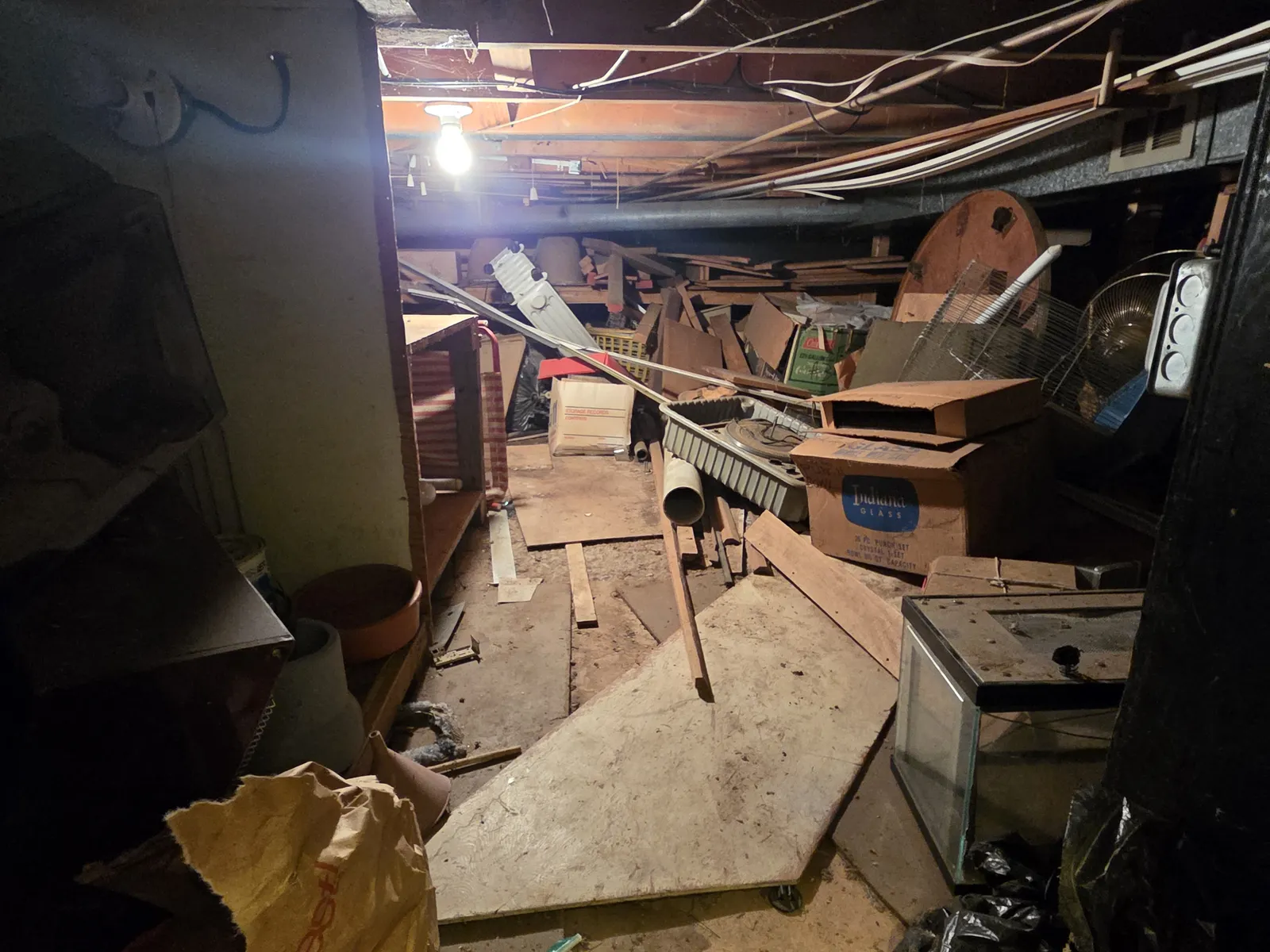
"I had a basement full of old moly boxes, along with some heavy bedroom items that were too much for me to handle." (Joe Egolf, Google review)
Most basements have a piece like that. A chest freezer, a sleeper sofa, a tall cabinet that weighs more than it looks.
To get a large item out of a basement safely, leave it where it is and send photos of the piece, its hookups and every step of the route out. One Call Clean Out, based in Barto, carries heavy basement items up the stairs for homeowners across Berks, Montgomery, Lehigh and Bucks counties.
You don't have to know what it weighs. If there's no tag you can reach safely, mark the weight unknown and move on. An appliance that's still plumbed in is a different conversation: ask who unhooks it, and whether that's its own visit, before you pick a pickup date. Nobody wants to be hunting for a plumber while the truck idles in the driveway.
In this guide
Describe the heavy item without moving it
Start with what you can see from where you're standing: what the piece is and, if the tag is easy to reach, the make and model. Take one photo of it where it sits and a close-up of any label. Anything you'd have to climb over or squeeze behind to read can wait for the crew.
Tall cabinets keep a secret now and then: an anti-tip strap screwed into the wall behind them, even when they look freestanding. CPSC recommends securing furniture per manufacturer instructions. Mention the strap to Justin, ask who takes it off, and keep kids away from the cabinet once it's loose. If the cabinet's moving to another room instead of leaving, hang on to its anchoring notes. And if one heavy dresser, sofa or cabinet is the whole job, our furniture removal service handles exactly that.
A guess that gets written down has a way of turning into a fact. So note where each number came from: a manufacturer's spec tied to the model number, your own tape measure, or nothing at all, in which case unknown is the honest answer.
| Item detail | Your note |
|---|---|
| Type and current location | _____ |
| Make and model, if easy to reach | _____ |
| Dimensions and where they came from | _____ |
| Weight and its source, or unknown | _____ |
| Visible connections or attachments | _____ |
| Items inside, loose parts or visible damage | _____ |
| Where it's headed | _____ |
In warehousing guidance, OSHA flags heavy lifting, overhead reach and awkward posture as injury risks [1]. That's the work you're handing off. A big freezer and a tight stairwell are really one problem, so let the hauler size up both before anyone settles on how it moves.
A few things change the carry, and they're easy to miss: a motor or reclining frame, a piece built into the cabinets, or drawers still full of stored stuff. Point them out, let the hauler say what prep each one needs and who does it, and list whatever you couldn't see safely.
Powered and folding frames deserve respect even on their way out. La-Z-Boy's manual for certain power recliners and motion sofas warns about sudden frame movement and poor grip spots. It's an older manual and it doesn't speak for every brand, which is why the model details help. A footrest stuck halfway out or a switch that does nothing goes on your list, and the prying stays with the crew.
Photograph the whole route out of the basement
A close-up of the freezer can't show the landing it has to turn on. So step back: one wider shot from the piece toward the stairs, one from the bottom looking up and one from the top looking down. Take them from wherever you can stand safely, without shoving anything heavy aside for the angle.
Then keep going past the basement door. Outdoor steps, a narrow gate and uneven ground between the house and where the truck parks all count, and so does anything you couldn't photograph. OSHA's materials-handling guidance looks at clear paths and solid footing alongside doorway width. Your photos won't prove the path can take every load, but they raise the right questions for the crew.
1. The piece where it sits
No moving it around for the picture.
2. Stairs and the way out
Shot from spots you can reach safely.
OSHA's workplace rule for mechanical moving calls for safe clearance at doorways, turns and walkways [2]. How much room and what gear your basement needs is the crew's call.
If you like to draw, a rough sketch from above shows the turns, and a side view shows the stairs and low openings. Leave the numbers off unless you measured safely and know exactly what you measured. Even a quick pencil version shows the crew where the stairs turn before the truck pulls in.
Pair each route photo with its measurement or open question.
| View or location | Show | Measurement or question |
|---|---|---|
| Item in place | Its surroundings and approach | _____ |
| Bottom of stairs or walkout | The first turn or opening | _____ |
| Stair flight and landing | Rails, changes of direction and overhead space | _____ |
| Top doorway and hall | The turn beyond the opening | _____ |
| Exterior route | Steps, gates and path to loading | _____ |
Photograph any scuff, crack or obstruction that's already there and you'd like the crew to see.
If a photo's missing, tell Justin which one and why. A turn you couldn't shoot or a spot you didn't feel safe standing in goes on your question list, and he'll decide whether it's worth an in-person look before pickup gets booked.
Text Justin photosWhat has to happen before a heavy item leaves
Two things on your list can look alike and aren't. A number you couldn't find is a question for Justin. An appliance still attached to plumbing is a job for somebody, and you'll want to know who. Both go on the request, each with its own question.
Where your request stands
A
Ready to ask for a price
The piece and room named, the way out shown, the unknowns listed.
B
Needs an in-person look
Say what the photos can't show and ask whether a quick visit makes sense.
C
Needs other work first
Settle who handles any prep or specialist work before removal gets scheduled.
| You spot | Ask before booking pickup |
|---|---|
| Weight, size or build you couldn't check | Does the crew need an in-person look or more details? |
| Plugged-in, plumbed, gas-connected or built-in item | Who is qualified to prep it, what work is needed and who books it? |
| Powered or complex mechanism | Does it need manual details or specialist prep? |
| Piano, safe, pool table or unusual load | Does the hauler clearly accept this item and the stairs? |
| Damaged stair, rail or route surface | What inspection or separate trade work comes before hauling? |
| Recent flooding or an unsafe doorway or stair | Which safety check must come before regular pickup? |
Hold off on the wrench. Don't unhook gas, water or coolant lines, or take the stairs apart, just to get a quote. Ask what prep the hauler handles and what needs a specialist. If a plumber has to unhook the appliance first, ask who's booking that visit, how you'll know it's done and whether it has to come before the crew's. Settle all of it before a pickup date goes on the calendar.
An old freezer's story doesn't end at your door, either. EPA explains that the final disposer handles refrigerant recovery and separate care for hazardous parts. Pulling the plug doesn't do any of that. Ask who takes the unit and how it's disposed of, or check the rules for any local or store program first.
Containers or chemicals sitting nearby are their own item. EPA advises keeping household hazardous products in their original containers with labels and never mixing the leftovers with other products [3]. Ask your local program about those instead of lumping them in with the freezer. One Call Clean Out doesn't take pesticides, insecticides, antifreeze, explosives, acids, paint thinner or most heavy chemicals.
Getting a price on one heavy basement item
A good request is short and honest about what's still open. Something like this works: freezer in the basement, no tag to read, landing turn in photo 3, hookup needs checking. Then ask which of those Justin would rather see in person.
One Call Clean Out gives an initial range from your photos and notes, then confirms the final price at the walkthrough before work [4]. Bring up anything unusual and any extra prep in that same conversation.
If you're comparing quotes, make sure they start from the same spot. Lifting a freezer off the curb and carrying one up basement stairs aren't the same job, so check that each quote covers the carry from downstairs and spells out any prep. Point out what's staying, too, so nobody pricing one freezer has to guess about the shelves and boxes beside it.
Pickup day itself asks very little of you. Clear small loose things off the stairs if you can do it safely, and mark anything that stays downstairs. Keep whoever makes the decisions reachable, and ask where family and pets should be while we work.
Floors, walls and the marks already on them get their own conversation in the furniture-removal planning guide.
When you're ready, ask for a basement-removal check with your notes and route photos. Once Justin has looked over the piece and the stairs and booked the job, the carry that was too much for you to handle is the crew's.
Get my estimateQuestions about removing large items from a basement
Should I move a heavy basement freezer or sofa before sending estimate photos?
No. Leave the freezer or sofa right where it sits and photograph it there. Skip any weight or model number you can't reach safely, and let the crew size up the piece and the stairs together, since OSHA flags heavy lifting and awkward posture as injury risks.
What hidden hazards should I flag on tall cabinets or reclining furniture?
Anti-tip straps behind tall cabinets, built-in framing, motorized or folding recliner parts, stuck footrests and anything still stored inside. Tell Justin about each one, keep children away from cabinets once they're unanchored, and leave any prying to the crew, who'll say what prep is needed and who handles it.
How do basement stairs and tight turns affect large-item removal?
They decide how the crew carries a freezer or sofa out, right alongside its weight. Show the whole route from the basement floor to the truck: narrow stair turns, low headroom, doors and walkout steps. Once pickup is set, keep that path clear.
Why can heavy sleeper sofas or sectionals cost more than standard living-room ranges?
Because One Call Clean Out prices on how much there is, where it sits and how heavy it is, a heavy sleeper sofa, motorized recliner or oversized sectional coming up basement stairs can run above the $300 to $400 living-room-set planning range. Flag those pieces early, with photos of the room and the stairs.
Sources and further reading
- Occupational Safety and Health Administration. Warehousing: Hazards and Solutions. Current guidance accessed October 29, 2026
- Occupational Safety and Health Administration. 1910.176: Handling materials, general. Current rule accessed October 29, 2026
- US Environmental Protection Agency. Household Hazardous Waste (HHW). Current guidance accessed October 29, 2026
- One Call Clean Out. Cleanout service and estimate information
Business details supplied by Justin Erb, November 2026.
LIMITED-TIME OFFER
Year-end special: save $25 or $75 on your cleanout.
Take $25 off any job of $200 or more, or $75 off any job of $500 or more.
Through December 31, 2026. One discount per job. Job totals count before any resale credit.
Have the full route assessed
The freezer, the landing, the gate by the driveway: show Justin all of it, and let the crew do the lifting.
Text Justin photosGet my estimateCall (484) 714-0484