
Cleanout field guide
Basement Storage Mistakes and How to Fix Them
Ten matching plastic totes from the hardware store just give unsorted clutter nicer lids. Real shelf space shows up when the wrong things leave the basement.
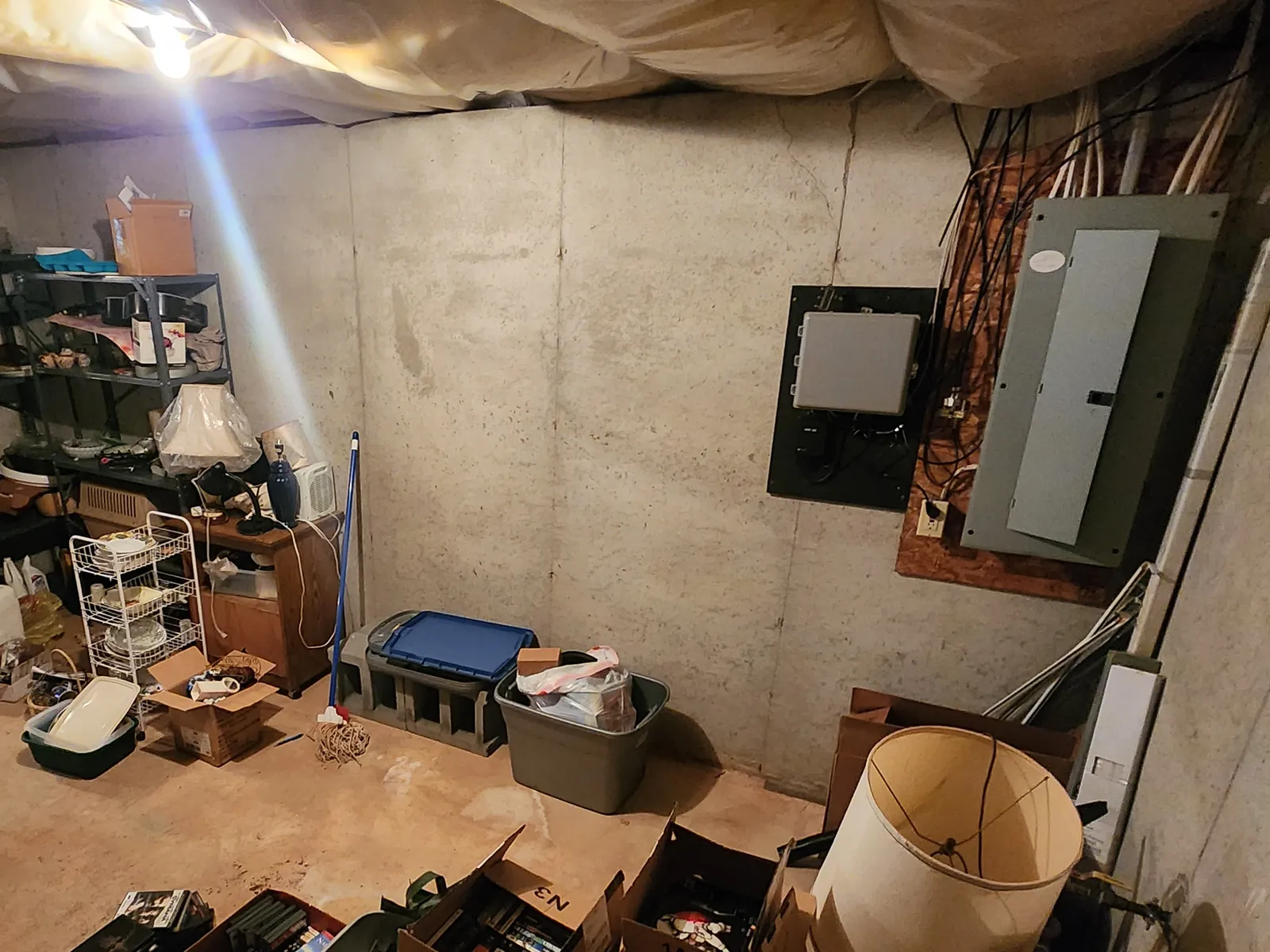
Downstairs, family photo albums and important papers often end up on a shelf right under water pipes. The National Archives advises keeping family papers and photographs out of damp basements [1]. A dry upstairs closet is the better spot for them.
Most basement storage fails when new bins hide unsorted clutter, family papers sit in damp air, and mystery boxes lack a deadline. You fix it by moving records upstairs, sorting one group first, and keeping walkways clear. When old clutter crowds your shelves, Barto's One Call Clean Out handles basement cleanouts in Berks, Montgomery, Lehigh and Bucks counties.
The trouble usually comes down to sequence. Get it right, and in December the holiday lights come off their shelf without anyone dragging a recliner out of the way.
In this guide
Why more bins never fix an unsorted basement
A carton with miscellaneous scrawled across the tape hides two unfinished calls: what's actually inside and why you kept it. A whole packed basement won't get sorted in one afternoon. One group, like camping gear, guest bedding or holiday decorations, is small enough to finish before dinner and settle at once.
Good gear doesn't need weekly use to stay. A dry tent you pitch once a year has a place on a shelf, while a ripped spare tent doesn't. Extra sheets that fit a bed you own earn their keep too, unlike mystery decor nobody in the house claims.
Bin labels that say why
Vague tape notes like spare stuff force you to pry open every lid months later. A specific note naming what's inside and its job, like guest bedding for the foldout bed, ties that tote straight to its shelf. Items waiting on someone else's call stay separate.
Bin shopping comes last, after the pile shrinks. A quick tape-measure check on shelf height and depth stops you from ordering totes that jam under low joists. Containers that pull straight out beat tall stacks you have to unpile for one extension cord. Your rack's weight rating is worth writing down too.
Heavy loads need a low spot planned before you lift a thing. In workplace storage guidance, OSHA recommends placing heavier loads on lower or middle shelves within rated limits, and your home rack's manual sets the exact cap. A heavy toolbox sits down low with room to lift cleanly, never up high beside spare pillows where you'd climb.
For things leaving the basement for good, our house cleanout sorting guide breaks down what to keep, sell, donate or haul. Some things down there, though, shouldn't stay in a cellar even when you want to keep them.
What shouldn't live on a basement shelf
Plastic lids don't turn a cellar into a safe. The National Archives advises keeping family papers and photos away from leaks, pipes and windows [1]. An upstairs closet also keeps loose snapshots away from heavy toolboxes while you sort.
Damp is hard to judge by feel. EPA recommends indoor relative humidity below 60 percent, with 30 to 50 percent preferred. A simple meter gives you that number, and a look around catches any condensation or leaks. One reading can't speak for every season, and a dehumidifier doesn't fix an active leak. Ongoing moisture needs repair first.
Furnace corners and utility sinks also hide half-empty cans from years ago. EPA advises keeping household chemicals in their original labeled containers, never mixing them, and checking local hazardous-waste programs [2]. An unlabeled or rusting jug is a question for your local waste office, not for your sorting pile.
| What turns up downstairs | Better spot |
|---|---|
| Family papers and photographs | Dry upstairs closet or file drawer, away from leaks, pipes and windows [1]. |
| Paint, cleaners or other household chemicals | Original labeled cans only, set aside for safe storage or local waste drop-off [2]. |
| Gear you still use often | One labeled shelf right near the cellar stairs. |
| Something a relative left behind | Separate hold spot with their name and pickup date, kept out of your totes. |
| Old furniture or broken gear | Checked for an indoor stair or walkout removal route. |
Recent water on the floor changes step one. Anyone dealing with storm seepage or standing water can start with our flooded-basement guide before planning new shelves.
Wet or dry, a few things down there can't ride in our truck at all.
Text Justin photosWhere basement shelves fit around utilities
Empty walls tempt people to cram in extra racks. The US Fire Administration advises keeping doorways and windows clear for escape [3]. A quick paper sketch marking stairs, exits, windows and utility gear builds open walkways into your layout from day one.
1. Stairs, doors and windows.
You want a straight, open lane from the cellar steps to outside doors and work benches.
2. Everyday vs. seasonal bins.
Tools and paper towels stay within arm's reach near the stairs. Holiday totes sit grouped together further back.
3. Service space at utilities.
Your furnace, water heater and breaker panel stay unblocked so a tech can work.
Temporary hold corner: One marked spot near the stairs holds ordinary items waiting on someone's answer.
Before a rack goes near the furnace, water heater or main water shutoff, the unit's manual or your heating tech can give you its clearance number.
Cardboard is the usual problem near heat. USFA advises keeping combustible items at least three feet from cooking and heating equipment, and your manual may call for wider gaps. That box wedged under the stairs beside the burner needs a new spot. Paint and cleaners aren't ordinary storage boxes, so their labels and county rules decide where they go [2].
A rack's footprint is easy to test before any steel comes down the stairs: mark it on the floor and walk past it. Brush a shutoff valve or turn sideways at a corner, and that's the wrong wall or too deep a rack.
That sideboard with cartons piled on top is storage too. A cleared top makes it easier to tell whether it earns its floor space.
Tall pieces that stay downstairs are a separate job. CPSC recommends following the manufacturer's instructions to secure furniture against tipping. When moving or anchoring a piece is too heavy for your household, get help.
Sample shelf rule: guest bedding
- Owner
- Whoever sets up the guest room when company visits.
- Location
- One closed tote on Shelf B.
- Space limit
- That single tote. When a new sheet set won't fit, an older set leaves instead of starting a second bin.
- Review
- Right after guests leave, once clean sheets come out of the dryer.
Your own shelf list can match how your household lives, from camping gear to holiday lights. Thick binders gather dust. One taped sheet on the rack gets read every time you reach for a bin.
Washed linens and the bin both need to be bone-dry before the lid snaps shut on a dry shelf. Clammy plastic or fresh condensation nearby means that shelf isn't ready yet. Next comes the pile that trips up most basements: the boxes still waiting on a decision.
Every undecided box needs a name and a date
Painter's tape with your sister's name and Sunday's date gives a box a real finish line. A save-for-later scribble does the opposite. It parks that carton beside the stairs until next spring, and by then nobody remembers the question.
Three reasons a box gets held
Someone else owns it.
Your relative or housemate says what they want done and who's picking it up. Nothing moves without their sign-off.
You're missing one fact.
Maybe you can't tell if a camp stove has all its parts or if a local charity takes cribs. One person takes on checking that single detail.
You aren't ready to call it.
A calendar date that fits your year goes on the tape, along with a cap on how much floor space that group gets. The pile stays closed to new boxes until it's settled.
Your sister's crib makes a good test case: one person, one question, one date, with the tape left on while the choice is open.
Sample hold note
| Item or group | Person deciding | Question to resolve | Review date | Next step |
|---|---|---|---|---|
| Outgrown crib by the back wall | Your sister | All parts there? | Next Sunday | Pick up or haul |
Heavy pieces at the bottom of narrow cellar steps need their own exit plan, separate from your shelf sorting. Our guide on removing large items from a basement covers what we check along the stairs and doorway so you don't muscle it yourself.
After the route is planned, the carrying falls to the crew. "They arrived promptly and worked very efficiently. They locked up our basement doors once those items were removed." (MarLu, Google review)
The holiday-lights test for basement shelves
Freshly stacked racks always look neat on Saturday afternoon. Real life tests them in December, when your hands are full and you need one bin of holiday lights. A shelf setup only works if you can read the label, pull that tote straight out, and slide it back.
Five signs a shelf works
- One glance at the label tells you what's inside without opening three boxes.
- Your walkway from the cellar steps stays clear.
- Everyday tools and seasonal totes slide right back into place without unstacking a tower.
- Anything new coming downstairs either takes an open bin spot or replaces something leaving.
- Each maybe box carries a name and a review date.
Awkward shelf spots show themselves the first time you put a tote away. Shifting one shelf bracket now beats buying another rack.
Ordinary trips downstairs let you spot bowing shelves, boxes creeping into the aisle, or fresh dampness early. A short note on what changed and who's fixing it keeps small problems small.
Sometimes your shelving isn't the problem at all. The floor is full of things you don't use, and clearing it sounds expensive. One summer job was quoted at $4,800. One Call Clean Out resold most of the items, and the final bill came to $1,800 ($3,000 less). No one can promise that result ahead of time.
The recliner you're done with may find a buyer through Perkiomenville Auction, and a camp stove with all its parts may sell at Jake's Flea Market. Extra sheets in good shape can go to Liberty Thrift, Goodwill or the Salvation Army, while old steel racks you're replacing can go to Groff's Recycling.
Years of downstairs clutter don't have to leave one weekend at a time. "They were absolutely wonderful and I will be requesting their services again for my final clean out. What a relief to have that taken care of so quickly!" (Emily G, Google review)
For a pile too heavy or too big to haul yourself, you can request a basement cleanout estimate so every tote left downstairs has its own spot.
Text Justin photosQuestions about basement storage and decluttering
Why does buying storage bins before sorting make basement clutter worse?
New bins bought before sorting lock you into keeping unsorted clutter and leave mismatched totes jammed on your shelves. You'll get further sorting one small group like camping gear first, writing specific labels, and measuring shelf height and depth. Then every bin pulls out cleanly.
What belongings should not be stored in a basement?
Family papers, important records and original photographs should stay upstairs in a dry room away from pipes, windows and leaks, just as the National Archives advises. EPA also recommends indoor humidity below 60 percent, with 30 to 50 percent preferred, and fixing active leaks before moisture-sensitive items go downstairs.
Where should heavy boxes and tools go on basement shelving?
Heavy toolboxes and dense cartons go on lower or middle shelves within each rack's rated weight limit, never up high. OSHA workplace storage guidance follows that same rule so you lift without climbing, while light bins like spare pillows sit higher. It also helps to keep the rack's weight rating on your shelf list and the aisle in front of each unit clear.
What does it typically cost to haul away unwanted basement clutter?
Hauling basement clutter with One Call Clean Out typically runs $150 to $200 for a single piece and $400 to $800 for a basement. How many things are leaving, whether they go up indoor stairs or out a walkout door, and how heavy they are decide your final price.
Sources and further reading
- National Archives. Storing Family Papers and Photographs. Current guidance accessed October 29, 2026
- US Environmental Protection Agency. Household Hazardous Waste (HHW). Current guidance accessed October 29, 2026
- US Fire Administration. Hoarding and Fire Safety. Page reviewed April 1, 2023; accessed October 29, 2026
Business details supplied by Justin Erb, November 2026.
LIMITED-TIME OFFER
Year-end special: save $25 or $75 on your cleanout.
Take $25 off any job of $200 or more, or $75 off any job of $500 or more.
Through December 31, 2026. One discount per job. Job totals count before any resale credit.
Shelves built for what stays
Photos of the cellar stairs and the pile usually tell Justin Erb what he's looking at. Calling about a week before you want the cellar cleared is ideal, though the crew can often come the very next day.
Once your family albums are dry upstairs and the old furniture's gone, those ten hardware-store totes finally earn their spot on the shelf.