
Cleanout field guide
Basement cleaning after flooding: what to do first
Nobody goes down those stairs until someone qualified has checked the basement. What happens after that decides what your insurer sees and what gets saved.
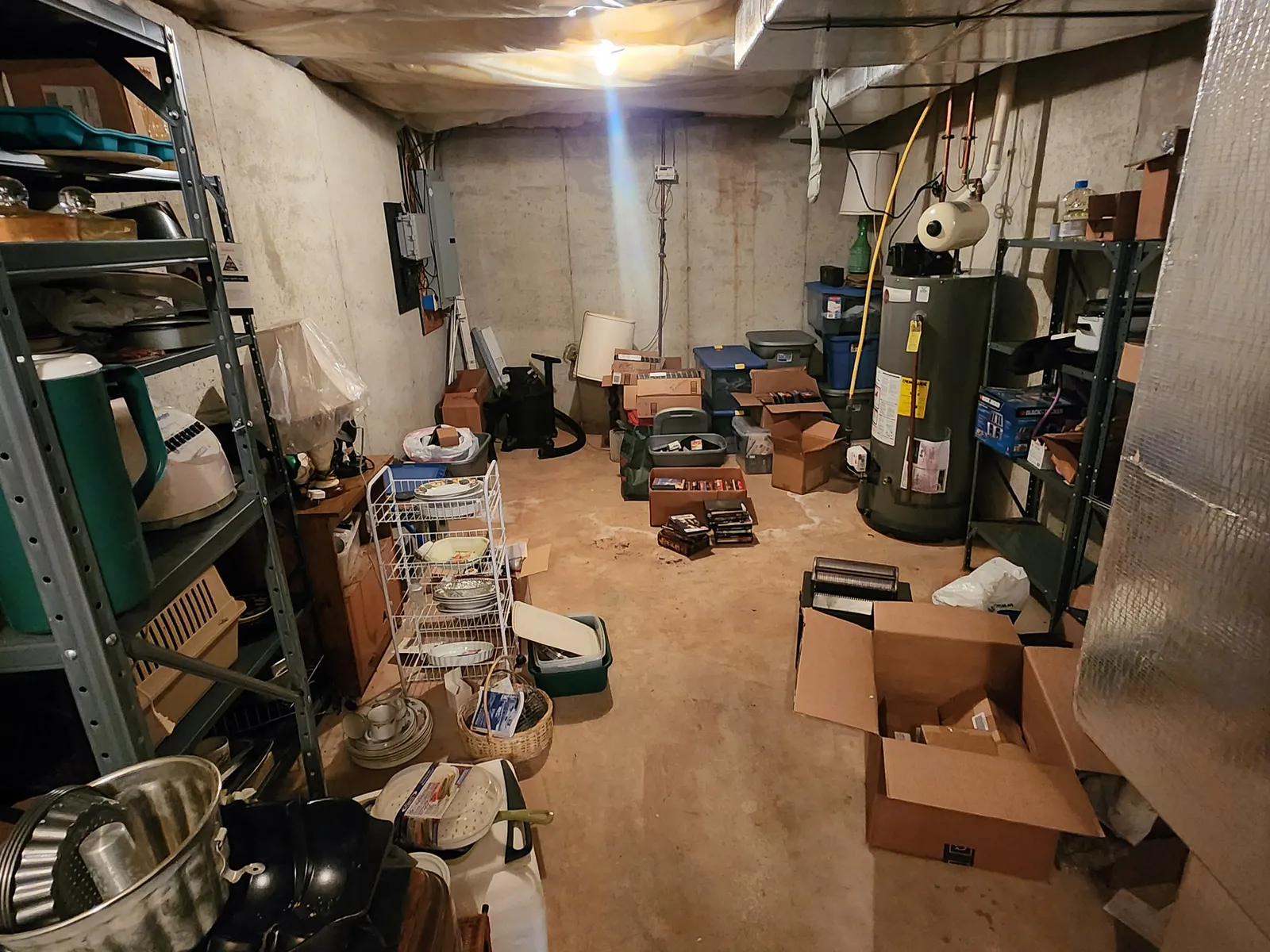
From the top of the basement stairs, the soaked boxes and the couch sitting in water all look like trash, and every instinct says start hauling tonight. That's the instinct to wait on. Before anyone goes down to collect belongings, a qualified professional should say it's safe [1], because standing water and electrical equipment are a dangerous combination [2].
After a basement flood, the order is a safety check, photos for your insurer, then the restoration crew's call on what can be saved. Hauling comes last. One Call Clean Out, based in Barto, carries flood-damaged furniture and boxes out of basements across Berks, Montgomery, Lehigh and Bucks counties once those calls are made.
Take that waterlogged couch. A photo of it, your insurer's notes about it and the keep-or-toss call should all end up in one place [1]. That small record is what tells our crew a piece is cleared to go, and it's also why a soaked box that poses a health risk doesn't have to sit downstairs until someone comes to look, as long as it's photographed first.
Licensed
and insured
Close to 3,000
jobs completed
In this guide
Who to call first after a basement flood
The first call goes to someone who can judge whether the basement is safe, and that isn't a hauling company. From a safe spot, you can tell them what you see: standing water, wet electrical gear, visible damage and where the water came from.
Four things
to describe from a safe spot
Three calls, in this order
01 / ENTRY
Entry and electrical safety
Emergency responder, utility or licensed electrician: deals with electrical or structural hazards before anyone goes down.
02 / DAMAGED ITEMS
Item review
Insurer: tells you what photos or proof the claim needs before anything leaves.
Restoration pro: looks at how water, contamination, drying and repairs affect your belongings and walls, and flags what still needs a clean-or-toss call.
03 / REMOVAL
The hauling job
Removal crew: takes only the pieces that are cleared, plans how they'll come out and prices that list. Anything outside the quote gets written down as well.
Once someone qualified gives the all clear, the most useful thing you own is the camera on your phone.
First call
isn't a hauling company
Phone camera
after a qualified all clear
Photograph flood damage before anything leaves
The photo that helps a claim is tied to one item. A wide shot shows the room and the water; a closer one shows which couch, freezer or carton needs a decision. Both come after the all clear.
EPA advises calling your insurer and taking photos of the home and belongings before cleanup [1]. Your insurer can tell you what has to stay put or be photographed, and those notes belong with your item list. If something urgent forced a piece out early, say so. A safety warning outranks a photo.
For flood claims, NFIP's claim guidance says to document damaged items and throw out anything that poses a health risk, and it suggests keeping small samples of damaged materials when needed. So you don't have to leave every wet item sitting downstairs while you wait for a visit. Each call weighs two things, the proof your claim needs and the health risk, and your insurer can tell you how that fits your claim. A line in your notes about why anything went early keeps the record straight.
One item
per photo that helps a claim
Wide, then close
the room, then which couch
A notebook or a shared file works fine. These six columns cover it:
| Field | What to record |
|---|---|
| Room and item | Which couch or which box, in words someone else could match |
| Photo reference | The photo number or file name |
| Observed exposure | How wet it got, as far as you know, or that you don't know |
| Insurer instruction | What your insurer said to photograph or keep, who said it and when |
| Assessment still needed | Who's still deciding whether it gets cleaned, kept or tossed |
| Removal status | On hold, staying, or cleared to haul |
For a couch, it's worth writing down the fabric and how high the water reached on it. An appliance's label details can wait until it's safe to get close, and the right pro decides how it's handled.
NFIP recommends noting the make, model and serial number of damaged appliances and electronics beside their photos. If a label's out of reach, that goes in the log too, and the unit stays where it is. A line that reads basement chest freezer, water to the handle, electrician checking ties the proof to one exact piece.
Label details
make, model and serial number
One line
ties proof to one exact piece
Which flood-damaged belongings can be saved
Water doesn't stop at what you can see. On a couch, the cushions and the underside matter as much as the top fabric. A soaked box of papers is one line in the log, but every page inside may not get the same answer.
Materials react differently, too. EPA's mold guidance notes that mold can stay trapped inside carpet and porous padding, which can make full cleaning tough or impossible. Solid wood and fabric cushions from the same flood often get different calls, and a top surface that looks dry says nothing certain about the inside.
The restoration pro is the one who makes the keep, clean, haul or hold call on each piece, with the reason and any insurance rule written beside it. Our crew isn't the right one to sort wet belongings on arrival, and we'd rather not guess with your things.
Family photos, art and keepsakes deserve a flag before the list is final. EPA suggests checking with a specialist when a damaged piece has real financial or family value. Any box with an undecided keepsake inside stays off the removal list until someone gives you an answer.
One log line
for a soaked box of papers
One call per piece
keep, clean, haul or hold
Keepsakes
deserve a flag before it's final
A few things take a different path entirely:
| Concern | What happens first |
|---|---|
| Suspected contamination or mold | The restoration pro and our crew both hear what you've seen, and you settle who handles those pieces |
| Household chemicals or damaged containers | They stay apart from everything else until someone tells you how to move or repack them |
| Damaged battery or battery-powered device | Contact the battery or device manufacturer for handling guidance [3] |
| Item still subject to an insurer's instruction | If your insurer said keep it, it stays until they say otherwise |
EPA says rusting or leaking hazardous containers need guidance from your local hazmat office or fire department, and warns against mixing household chemicals [4]. Mystery liquids stay out of the regular debris pile, and nobody needs to open a can just to identify it for a quote.
Insurer said keep it
it stays until they say otherwise
Four kinds
need their own plan
Mystery liquids
out of the regular debris pile
What to tell a junk removal crew about a flooded basement
Say the word flood first, before volume or dates come up. A quick photo of the couch leaves out what Justin needs most: the room's condition, the stairs and what the restoration pros already decided.
Six things Justin will want to know
- Where the property is, and where the water came from (or that you're not sure yet).
- Any water still standing, suspected contamination or open hazards, described without going in to look.
- Who checked entry and the utilities, what limits are still in place and how our crew can see those instructions.
- Which items are cleared to haul and which are on hold for your insurer or restoration pro.
- The stairs, the doors, where a truck can load and any heavy wet pieces that need extra care.
- Who signs off on the job, plus any drying, cleaning, shutoff or repair work booked with someone else.
Flood first
before volume or dates come up
Room, stairs
and what restoration pros already decided
From there, Justin gives you a range from your photos and notes, and an on-site walkthrough settles the exact list and the final price before anything is carried out. If a restoration review moves more pieces onto the list later, the list and the job change with it, and nobody hauls a held box on a guess. One customer summed up the crew this way: "They were courteous, efficient, on time and did exactly what they promised." (Laura Campbell, Google review)
Our basement cleanout page has the details on what we haul from basements. Once safety is cleared, the large basement item guide helps map out getting heavy pieces up the stairs.
Get my estimateHeld boxes
never hauled on a guess
Walkthrough
settles exact list, final price
Flooded basement cleanup questions
Why does the basement still smell after flooding?
A smell that hangs on is a sign the restoration pro should take another look at the wet materials and where the water came in. EPA's cleanup guidance includes fixing the water problem and checking for lingering moldy odors. It helps to tell them where the smell is strongest and whether it changes after rain or when equipment runs. An empty room or a covered-up odor can still hide damp materials, and it's better not to open walls or move suspect materials to find the source yourself.
Which disinfectant should I use after a flood?
Your restoration pro should pick it, since the right cleaning method depends on the material and what was in the water. Whatever they choose, follow the label and never mix cleaning products.
What does a flooded-basement cleanup cost?
Hauling and flood restoration are priced separately. Justin's $400 to $800 basement cleanout range covers carrying things out, not drying, cleaning or repairs, which the restoration company quotes on its own. One Call Clean Out has never charged by the truckload, so the hauling number comes down to how much there is, where it sits and how heavy the wet pieces are.
How long does a basement take to dry after flooding?
There's no set number of days. EPA's reentry checklist looks for dry materials, clean surfaces and removal of anything that can't be cleaned and dried.
EPA urges drying wet areas within 24 to 48 hours to fight mold. That's a reason to move fast, not a promise that every flooded basement is dry in two days. Water depth, materials and repairs all stretch the timeline, so it's fair to ask how dryness gets tested on your job.
Removal and restoration are two separate jobs
When our truck pulls away, the first check is the item list: every cleared piece gone, every held piece still where you left it.
Restoration finishes on its own schedule. Before anything goes back downstairs, it's worth asking what caused the flood, what fixed it and whether any issue is still open, then keeping that answer with your restoration contact. EPA recommends rechecking damp areas later for new water or mold, so a date for that check belongs on the calendar before boxes hide the spot.
EPA advises asking a qualified restoration or remediation professional, when needed, to decide whether cleanup is complete before you move back in [1]. That decision is separate from our receipt or a photo of an empty room.
Fans and heat aren't a quick fix, either. EPA warns against running fans once mold starts growing [1]. Flooded HVAC systems and ducts stay off until a pro clears them.
Item list
first check once the truck leaves
Cause, fix, open issues
keep with your restoration contact
Two checklists for one basement
Item removal
Every room and every piece on the list, checked off.
Rooms and pieces on the list: __________
Did everything on the list come out of the rooms it was in?
Is everything staying or on hold still where you left it?
Has someone taken on the things our crew can't haul?
Restoration work
Drying, treatment and repairs, each with its own provider.
Assigned provider: __________
Has everything that got wet been checked, cleaned and dried?
Is any contamination, repair or equipment problem still open?
Who decides the cleanup is complete before you move back in?
Completion record
What's left, and who's handling it.
When your list is ready, contact us about basement removal. And once the floor is dry and signed off, our basement storage guide is worth a read before the bins go back down.
Text Justin photosRestoration
finishes on its own schedule
Held pieces
first check: where you left it
Cleared pieces
gone once the truck pulls away
Sources and further reading
- U.S. Environmental Protection Agency. Text Version of the Flooded Home
- Centers for Disease Control and Prevention. Safety Guidelines: Reentering Your Flooded Home
- Pennsylvania Department of Environmental Protection. Household Battery Recycling
- U.S. Environmental Protection Agency. Household Hazardous Waste (HHW)
Business details supplied by Justin Erb, November 2026.
LIMITED-TIME OFFER
Year-end special: save $25 or $75 on your cleanout.
Take $25 off any job of $200 or more, or $75 off any job of $500 or more.
Through December 31, 2026. One discount per job. Job totals count before any resale credit.
Haul the flood pile after the go-ahead
When the go-ahead comes, we'll carry the waterlogged couch and the swollen boxes up the same stairs you've been staring down. Your insurer already has every photo, the keepsake boxes are still off the list waiting on their answer, and the basement is finally ready for whoever dries it out.
Text Justin photosGet my estimateCall (484) 714-04843 trucks
2 trailers, 3 to 4 helpers
Four counties
Berks, Montgomery, Lehigh and Bucks